Category: World Affairs

  • Ukrainian-Russia Links

    As of March 20 2021 I’ll be adding links to the TOP of the post rather than the BOTTOM. (I”ll leave the pre-March 20 posts at the very bottom:

    A nonpolitical lifestyle Youtuber from Russia walks through a well known shopping mall and notices the differences. Who knows how much she is influenced by the political atmosphere. And it’s not that interesting to note that the decline of international chains doesn’t really matter. On the other hand,it’s nice simply to walk through a Russian shopping mall to see the subtle aspects to ordinary culture and to hear her incidental remarks. “The most important thing is that peace will return.”

    ***** (Below are links pre-March 20).

    [I’m working on a super-awesome playlist of Ukrainian music on youtube — stay tuned!).

    I’ve been really focused on Russian attacks on Ukraine all day yesterday and today. I finally decided just to keep an ongoing column on the event. I have never felt such a strong desire to punch a random Russian in the face. I lived in Ukraine for a year between 1997-8 and visited there two other times. I got an opportunity to understand what is unique and interesting about the place and its people.

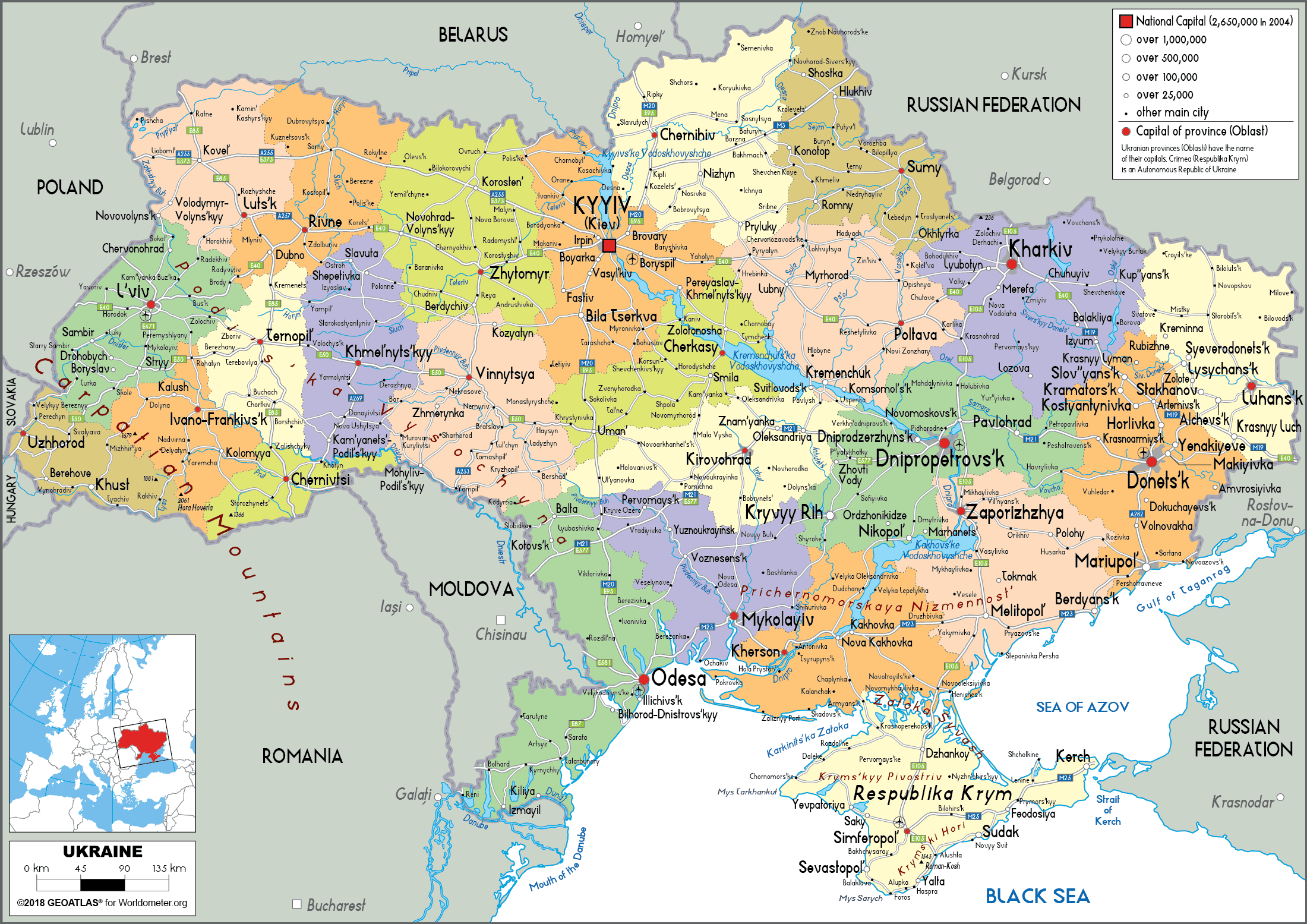
    First, here’s a detailed map of Ukraine — the best I could find. Here’s a link to confirmed charities and governmental organizations to help Ukraine.

    I have a Ukraine-Europe list of Twitter on reliable sources of information, with a few scholars thrown in.

    *****

    MY 2 CENTS ABOUT UKRAINE. What I don’t understand about Russian military adventurism is that Russia needs access to the European market way more than Europe needs the Russian market (for now anyway). Why would Russia destroy its relationship with current and future customers in Europe just to satisfy its need to dominate its neighbor? NEWSFLASH: The economy is not just about petroleum anymore.

    PRESIDENT-BICYCLIST. Here’s the amazing & surreal musical intro to the “SERVANT OF THE PEOPLE” TV sitcom that made Ukraine’s president Zelensky famous — he starred as a mild-mannered high school history teacher who unexpectedly is elected president to rid his country of corruption. It depicts the actor (also the show’s co-creator) riding his bicycle throughout the Kiev streets . Dealing with a guy like Putin sounds like a dark plot twist for a not-yet-produced Season 3.

    The full series is on Youtube with subtitles here. (I recommend watching the first episode at least).

    The singer of the theme song is Dmytro Shurov, who sang in a Ukrainian group OKEAN ELZY and also played piano for the iconic Russian rock group, Zemfira. Musically speaking, Ukrainian singers used to sing freely in Russia and vice versa, but all that seemed to change after 2014 — when Russia took over the Crimea. I haven’t listened to much of Okean Elzy except the first album — which I bought at a music shop in Lutsk in 2001. (Also on youtube).

    Anne Applebaum on Russia (from 2015):

    “Not only the United States but all of what used to be called ‘the West’ has been flummoxed by (Russia’s) moves, even thrown into strategic disarray. And no wonder. In the quarter-century since the fall of Communism, we’ve forgotten what a cynical, unprincipled, authoritarian Russian regime looks like, especially one with an audacious global strategy and no qualms whatsoever about sacrificing human life. Let me say it again more clearly: Almost all of the men who currently rule Russia (and they are all men) were taught and trained by the KGB. Their teaching and training shows. Why would it not?
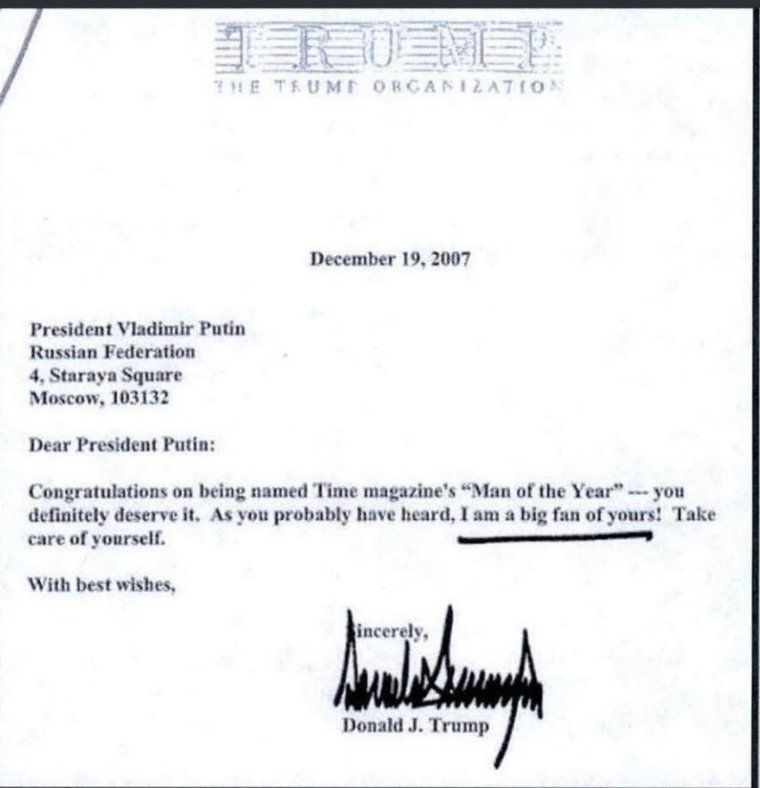
    Source

    To those who say that Russia’s attack does not reflect the will of the Russian people, keep in mind that in the 2018 Russian presidential election, 76.7% of the Russian people voted for Putin. (Second place was far-right loony Zhirinovsky with 6%). An overwhelming majority of the Russian people have been giving Putin a blank check for quite a while.

    ZELENSKY’S FEB 23 MESSAGE TO THE RUSSIAN PEOPLE:


    “We are separated by more than 2000 km of mutual borders, along which 200,000 of your soldiers and 1,000 armored vehicles are standing. Your leadership has approved their step forward onto the territory of another country. This step could become the beginning of a big war. The cause could come up at any moment, any provocation, any spark, a spark that could burn everything down. You are told that this flame will liberate the people of Ukraine, but the Ukrainian people are free. You are told we hate Russian culture. How can one hate a culture? … Neighbors always enrich each other culturally, however, that doesn’t make them a single whole, it doesn’t dissolve us into you. We are different, but that is not a reason to be enemies.


    “Listen to the voice of reason. The people of Ukraine want peace, the authorities in Ukraine want peace, they want it and are doing everything they can for it. We don’t need war. But if we are attacked, if someone attempts to take away our land, our freedom, our lives, the lives of our children, we will defend ourselves. We won’t attack, but defend ourselves. By attacking, you will see our faces, not our backs, but our faces. War will remove guarantees from everyone. No one will have security guarantees any more. Who will suffer most of all from this? People. Who wants this the least? People. Who can not allow this to happen? People. There are these people among you, I’m sure of it.


    “I know this speech of mine won’t be shown on Russian TV, but the people of Russia need to see it. They need to know the truth. The truth is that this must be stopped before it is too late, and if the leadership of the Russia does not want to sit down at a table for peace with us, then maybe it will sit down at a table with you. Do Russians want war? I would very much like to answer this question. But the answer depends only on you — the citizens of the Russian Federation.”

    Elizabeth Kolbert: If ever there were a moment to rethink our dependence on fossil fuels it would seem to be right about now:

    Bill McKibben:

     The last time a European autocrat sent tanks speeding across the plains to subjugate sovereign nations we (eventually) responded by sending millions of men off to war and sacrificing everything about our domestic economy in order to produce the armaments needed to fight. This time America’s burden involves…paying higher gas prices. And for many that’s too much. Continuing the uninterrupted enjoyment of our national fleet of grotesquely oversized SUVs and pickups is more important to some significant part of our population than standing beside brave people running real and terrible risks. There are Americans who can’t afford the fuel to heat their homes—we need to assist them. But the loudest whiners are people who have decided that freedom comes for free.

    The way to square this circle, of course, is to rapidly build out renewable energy, and the electric vehicles that can use it. That step would make standing by the victims of this autocratic thug almost painless (along with, you know, helping save the planet). Once you have an EV gas prices are not a worry—electric rates do not jump up and down, and the fueling costs are radically lower anyway. Where once we built tanks to defend democracy, now we need to build air source heat pumps and EV chargers, along with electric buses and bike lanes. President Biden is warning the oil companies not to price-gouge, but of course they will—we need to break their power. And one way to do that is to quickly build out clean energy technology, everywhere we can.

    Paul Krugman on one Russian vulnerability — how much of their oil wealth is hidden overseas:

    There are two uncomfortable facts here. First, a number of influential people, both in business and in politics, are deeply financially enmeshed with Russian kleptocrats. This is especially true in Britain. Second, it will be hard to go after laundered Russian money without making life harder for all money launderers, wherever they come from — and while Russian plutocrats may be the world champions in that sport, they’re hardly unique: Ultrawealthy people all over the world have money hidden in offshore accounts.

    What this means is that taking effective action against Putin’s greatest vulnerability will require facing up to and overcoming the West’s own corruption.

    Two instructive reader comments:

    Going after dark money is notoriously difficult. Russian money is all over NYC real estate, which is part of the reason the cost of anything here has become so high in recent years. Trump is out there saying that Putin is brilliant because his assets – and the assets of his cohort – are tied up in Russian money. It would be great if we could tie up these funds. But good luck proving connections to dark money. And good luck getting Switzerland to go along with any of this. Another option is to prevent Russians from entering the United States and other countries. Closing the borders will make it difficult for Russian cash – and a lot of it is cold hard cash – to be stored outside of Russia.

    ****

    “The Europeans, unfortunately, have fecklessly allowed themselves to become highly dependent on imports of Russian natural gas.” Just as the United States has fecklessly allowed itself to become highly dependent on Chinese imports. What sanctions would you propose should China invade Taiwan?

    Saturday. Feb 26. As unexpected as this outcome seems to be, it now seems that Ukraine might actually succeed in defending itself. Europe and the world seems to be uniting for Ukraine, and Russian military and influence now appears to be substantially weaker than expected. Today could be a very good day both for Ukraine and the cause of democracy. It’s a day when you realize that it’s not just about guns; it’s also about winning hearts and minds.

    Reason for optimism: increasing support for cutting off SWIFT, commitments of more equipment from the US and other countries, defacement of Russian government websites, popular support in Eastern Europe –leading perhaps to protests and blockades in Poland, the fact that Russian supply lines are overextended and invading troops are outnumbered by Ukrainian people. Of course, Russian missiles could still cause a lot of casualties…

    One gloomy NATO analyst said a few days ago that Kiev’s defenses might last for only a few days until they run out of weapons. but now it appears that NATO has been persuaded that providing more equipment wouldn’t be a lost cause. The fact that Ukraine’s Internet/communication system has stayed intact means that Putin’s scare tactics are less effective.

    STEPHEN COLBERT FOR PRESIDENT! This morning on CNN a retired US military commander, sounding almost apologetic, said that Ukrainian President Zelensky turned out to be a pretty good leader despite the fact that he was a comedian and actor. That shows how little he knows: American actors and comedians — in the few cases they have been elected to political office — have turned out to be generally competent and serious-minded: Al Franken, Ronald Reagan, Arnold Schwarzenegger. As Paula Begala once said, politics is “show business for ugly people.” But actors know a lot about stagecraft, sensing the mood of an audience and recognizing the differences between reality and artifice.

    (Colbert would probably do a great job, as would America Ferrera, Jon Stewart, Tina Fey. Sure, a lot of serious actors would probably be great also.) Tom Hanks — when asked if he should run for president — replied, “Good lord, no! I’m still getting a lot of work; politics is show business for ugly people, and I’m too good-looking to qualify.”

    In 1997-9 I lived in Lutsk & Lviv, traveled to Odessa, Donetsk, Kiev, Ivano-Frankivsk, etc. To nosy people you can gawk at annotated photo galleries of teaching there — here and here .

    Michael McFaul debunks the idea that NATO expansion had anything to do with Russia’s recent action.

    ***

    I’m a big fan of Onuka’s Mozaica concert for nonpolitical reasons, but even more interesting is that Ukrainian music labels are using this graphic in Youtube search results. Very clever and totally appropriate.

    Author and Human rights advocate Stanislav Aseyev writes about being tortured by Russians when he was arrested. This excerpt comes from his book Torture Camp on Paradise Street which will eventually be translated. At the bottom of this book excerpt is an English language interview with KATE TSURKAN (I assume she is also the book’s translator — confirmed; she also edits an Eastern European literary magazine, Apofenie ). Here’s the author himself participating in a zoom call (he does not speak English and there is no closed-captioning, but most of the other speakers speak in English).

    Judd Legum on how Western fossil fuel companies are using Russia’s attack as a great opportunity to pitch US natural gas. He writes:

    The reality is that “unleashing” America’s energy would take a long time before it made any meaningful impact in Europe. New fossil fuel projects take years to come online. A more effective way to weaken Russia’s geopolitical influence is to accelerate the transition to clean energy. This would not only help Europe achieve net-zero emissions — and stave off the most catastrophic impacts of climate change — but would also subvert Russia’s attempts to use natural gas as a political weapon.

    Kate Aronoff has a similar piece on New Republic.

    Stephen Colbert has been incredible these last few days. But I thought Bernie Sanders’ guest appearance was riveting; he said exactly what needs to be said.

    Here’s a great online colloquium with 3 of the most pre-eminent scholars of European history. This 60 minute discussion on youtube covers why the West (and indeed the world) need to understand why Russia’s invasion happened and how we can be vigilant in the future. All brilliant thoughts — as I remembered:

    • Germany and even West Europe haven’t spent enough to defend the cause of liberty. That is a real problem. It’s a wakeup call to the world.
    • Russia has showed a pattern of behavior like this, but the West never checked it, causing it to increase in severity.
    • Ukraine has always has a separate identity from Russia, but Putin has convinced himself otherwise.
    • The blind spot of dictators is that they become unable to understand the world outside of their “yes men.”
    • Putin and Russia is too unpredictable to take anything for granted.
    • You can donate weapons to the Ukrainian cause with just cause because they are literally defending themselves against attacking. Ukraine didn’t threaten anybody or commit atrocities. They are trying

    Here’s a quote by Applebaum from that discussion: “Germans have understood that the lesson of their history is not that Germany must remain forever pacifist. The lesson is that Germany must defend democracy and fight the modern version of fascism in Europe when it emerges.”

    ***

    March 3.

    Postwar reparations has always been a controversial subject for any war, but I would probably support the use of of some seized wealth of Russian oligarchs to repair the country that Russia destroyed (of course, it would depend on the circumstances behind the acquisition and legality of how the wealth was maintained). Of course, that goes both ways: US should be subject to the same standards when they decide to attack a country.

    I have been racking my brown trying to remember all the places I have visited in Ukraine. Here’s the list I came up with.

    • Lutsk. This is where I taught. It’s in northwest Ukraine equidistant between Belorussia and Poland.
    • Lviv. I lived there about a week and visited there frequently — every few weeks. During my later visits in 1999 and 2001, I spent a good amount of time in Lviv before embarking on trips from the Lviv airport or train station. I loved soaking in the wonderful culture. Fun fact: on 4 different occasions, 4 different beautiful Ukrainian women gave me a tour of that wonderful city! (Here’s my Lviv photo gallery!)
    • Zhytomyr. I was a guest lecturer at their university. 3 days. I had a lot of fun with the 2 local Peace Corps volunteers and got to learn about the fancy Inturist accomodations.
    • Kiev. Never stayed there overnight, but visited there about 5-6 times, and then again in 1999. My main reason for visiting — I kid you not — was to visit an American doctor about my headaches. I got to know the train station very well!
    • Ivano-Frankivsk. Gave a guest lecture and met 2 lovely Ukrainian women. Also, for some strange reason I remember watching Gremlins and Grease in the hotel room.
    • Kremenetz/Termopol. I visited a school in Kremenetz in the middle of winter. Cold! I am not 100% sure, but I remember that I went with a student group for a weekend trip where I learned that I am really really bad about going spelunking in a cave.
    • Kolomiya and its surrounding areas. One of my favorite students invited me to vacation a few days in that picturesque rural area. She was my tour guide for a 2 day trip. I don’t remember exactly where we went, but I’m pretty sure we went to Podilski Tovtry National Nature Park and probably to Chernivtsi and maybe some smaller towns. I remember being awestruck at the place’s beauty and appreciating the Hutsuli culture.
    • Donetsk. I spent a long weekend in this east Ukrainian city which still to have a lot of Russian aspects. I met with two Peace Corps volunteer I knew while serving in Albania and hung around a lot of Americans the whole time (We even went an American burger place). The most striking thing about the trip was the train trip. I shared a cabin with a family and a cabin with a beautiful female college student who was also a fashion model.
    • Odesa. In summer 1999 I ended up spending 3-4 days at this lovely southern city. The city was great, and I stayed at a youth camp along the beach, but for various reasons I didn’t have much time to enjoy myself here.

    March 4.

    USA.Gov survey: When US registered voters were recently asked what adjective best describes Russia, 42% said “Communist,” 13% said “Socialist,” 11% said Capitalist, 34% said “Something else/Not sure”. (Wikipedia calls it a “mixed economy”; I personally think labels like “oligarchy, “”crony capitalism” or even “kleptocracy” are more accurate. ).

  • More nominations for the Nobel Peace Prize

    So the winner of this year’s  Nobel Peace Price is …. the EU? What the heck? Who’s going to be awarded the 2013 peace prize — the Nobel Peace Prize committee itself?

    The Nobel Peace Prize for 2014 will be awarded to the word “peace”  … for its undeniable power to help people express their ideas more easily.

    For 2015 the Peace Prize will be awarded to “Life” for demonstrating  temerity not to shirk from terrifying nonexistence and to  infuse people with the desire to live and let live.

    For 2016 it will be awarded to the “smile” for its unsung role in promoting peace and cooperation.

    For 2017 it will be awarded to “paper” without whom the leading peace treaties would never  have been possible.

    For 2018 it will be awarded to “war” — which frankly has gotten a bad rap these last few centuries — but whose contrast helps us to value what peace itself is.

    For 2019 it will be awarded to “myself” , the place where all peace has to start.

    For 2020 it will be awarded to “traffic lights” for its crucial role in preventing collisions and disputes.

    For 2021 it will be awarded to “Rainbows” for suggesting a kind of society which unifies all kinds.

    For 2022 it will be awarded to “wimps” who are brave enough to embrace the path of nonconflict against intimidation and aggresison.

    For 2022 a joint award will be given to   “cannabis” for promoting the cause of indifference to conflict.

    For 2023 it will be awarded to “Martin Luther King” because there’s nothing wrong with repeating oneself sometimes.

    For 2024 a joint award will be given to “mouthwash and underarm deodorant” for helping people to get closer.

    I realize that with this year’s  award, the Nobel committee has made a clever  and interesting point about the benefits of international bodies. But the main purpose of awards is  to identify and reward extraordinary individuals. You are squandering this real value of an award when you try to reward  institutions  rather than individuals. Individuals are the ones who actually  fight for these concepts. They are outgunned and underfunded. Their individual struggles matter, and awards can help expose these struggles  to a wider audience and raise the status of these people in their own society. Peacemakers, contrary to what you might think, rarely make the news; they rarely work with a sizable PR budget, and frankly they don’t often “win” (even if ultimately their point of view ends up prevailing over the long term).

  • Waltz with Bashir: Do perpetrators tell better stories than victims?

    Waltz with Bashir is a serious animated film which tells the autobiographical story of an Israeli soldier during the Israel attack on Lebanon.  This was a serious film tackling important questions in an innovative way.  imageAt the same time, I was uncomfortable with how it dramatized  political events. It raises an interesting ethical and aesthetic question: is the Israeli soldier’s perspective a good vantage point for  viewing a historical event (and  constructing a narrative)?

    In the film, Israeli soldiers are semi-innocent bystanders who watched Lebanese murder one another. Poor Israeli soldiers are stuck in Beirut while barbarian Lebanese fire at them.

    In reality, Israeli attacked a peaceful nation (where yes PLO used to hide out).

    (more…)

  • Israel’s brazen actions go unpunished….again

    I really hate to blog about topical events, but this one irks me in particular.   I have been totally overlooking  the festering wound in Gaza. image If you are looking for reliable sources on the Palestinian side, try Juan Cole’s Informed Consent blog  and the blog of Ali Abunimah of the always great Electronic Intifada). What follows is just a hodgepodge of things to strike me.

    Forget for a moment that Israel is stealing European passports to assassinate people or that it ignores the Goldstone  Report which found them responsible for the overwhelming majority of civilian casualties in Gaza.  Forget for the moment that (according to Juan Cole) conditions in Gaza as a result of the Israeli blockade are deplorable:

    • “In Gaza, Israel’s blockade is debilitating the healthcare system, limiting medical supplies and the training of medical personnel and preventing serious medical cases from travelling outside the Strip for specialized treatment.”
    • “Israel’s 2008-2009 military operation damaged 15 of the Strip’s 27 hospitals and damaged or destroyed 43 of its 110 primary health care facilities, none of which have been repaired or rebuilt because of the construction materials ban.”
    • “Some 15-20 percent of essential medicines are commonly out of stock and there are shortages of essential spare parts for many items of medical equipment . . . ”
    • In Late 2008, nearly 1 in 5 Palestinians lived in “extreme poverty.” Over half lived below the poverty line.
    • “In the second half of 2008, one third of West Bank households and 71 percent of Gaza households received food assistance, with food accounting for roughly half total household expenditures – making families highly vulnerable to food price fluctuations.”
    • “In May 2008, 56 percent of Gazans and 25 percent of West Bank residents were deemed food insecure by the UN.”
    • Chronic malnutrition has risen in Gaza over the past few years to reach 10.2 percent.” [This is especially true among children in Gaza).
    • The entire fishing and agricultural sectors in the Palestinian population are very badly off.This heartbreaking account of Gaza by US physicians doing volunteer medical work there underlines how inadequate the medical facilities are.

    Forget for a moment that the aid ship contained not Hamas terrorists but a Nobel Peace Prize winner, a former UN official, several writers, filmmakers and liberal peace activists from around the world. Forget for a moment that US is supplying billions of dollars every year to the Israeli military, turning a blind eye toward Israel’s nuclear ambitions and humoring Israel’s dreams of destroying Iran.

    Hussein Ibish writes:

    The whole point of the “Gaza flotilla” was to get a reaction out of Israel and call international attention to the problem of the blockade of Gaza. Israeli officials described it as “a provocation” and I’m not sure that was entirely incorrect: like all other acts of civil disobedience it was designed to provoke a response. I’m shocked but not surprised that the Israeli military, which was determined to prevent those ships from reaching the Gaza port, managed to mishandle the situation so badly that, as present report stand, at least 10 flotilla participants were killed and 60 injured. The Israelis claim that the ships had weapons on board and that their commandos were attacked with sticks and knives and had to defend themselves. I don’t think anyone in the world with the least degree of critical rationality is going to take this explanation at face value. It’s been rendered even more fatuous by the extraordinary hyperbole coming out of Deputy Foreign Minister Danny Ayalon, who claimed that flotilla members were connected not only to Hamas, but to Al Qaeda! Next they will be telling us these were members of the Nazi party. It won’t wash.

    Adam Shapiro comments about the provocative nature of the expedition:

    …unfortunately, Israel has made humanitarian assistance to Gaza a political issue. So, Israel keeps a list of items that are permitted into Gaza and items that are not permitted into Gaza.

    Many medicines, many machines that are needed for medical operations and medical procedures are not allowed into Gaza. Some basic foodstuffs are not allowed into Gaza to the Palestinians. And so Israel has taken a very radical policy through its blockade, and made humanitarian assistance a political issue.

    The blockade itself is, of course, political. And, so, we are challenging the blockade itself and, in doing so, trying to deliver the much-needed humanitarian and reconstruction assistance that Gaza needs.

    We need to look at one case: that of  Emily Henochowicz, a 21 year old Jewish-American  artist who was injured by Israeli soldiers for protesting Israel’s assault on the aid shipment. (More).  This woman’s crime is  of posing a  threat to  the moral legitimacy of the Israeli regime.  (By the way, all the images for this post are from her sketchbook. I think Emily’s drawings certainly have  political aspects to them, but it would be naive to say they are only political works of art (not that there’s anything wrong with that).  I would describe them as more free-spirited and upbeat than anything else.

    We also need to look towards the admittedly humorous case of Noam Chomsky being denied entry into the West Bank to give a lecture . Chomsky poses a threat to nobody except to the overall moral legitimacy of the Israeli government.

    image

    This is a government that discriminates against Arabs and allows itself to retaliate against attacks by killing 8 to 10 times the original number.

    I have friends who are Israeli or Israeli supporters. As contemptuous as I have been about the policies of the Israel government, I have never questioned Israel’s right to exist as a legitimate government.  But:

    1. Would the Israeli government be able to act so lawlessly if it did not receive US aid and protection?
    2. Can Israel be really trusted to deal honestly and fairly with the Palestinian government? (No one would accuse Mahmoud Abbas of being a militant or terrorist, although a case could surely made against Sharon or Netanyahu).
    3. Why does Israel – a free and well-functioning democracy by most outside observers – continue to elect a right-wing governing coalition that is oblivious to world opinion?
    4. If Israel cannot let the Palestinian Authority rule itself, does that mean a one state solution is the only viable possibility?

    Jonathan Schwartz notes that the US is committed to making sure Israel stop its provocative behavior, halt its policy of threats and belligerence toward its neighbors, and take irreversible steps to fulfill its denuclearization commitments, and comply with international law  and the US is also committed to holding  perpetrators of acts of piracy  accountable for their crimes. (ha, ha!). Andrew Sullivan notes that because the aid ship was flying a Turkish flag, it has the right to request NATO help against its aggressors (now, that would be fun!).

    image  for this sketch, Emily Henochowicz writes “Ingredients; One layer of determined activist over a layer of obediently angry army men, and a layer of camera people (to give it that worldly flavor) with a bulldozer on-top!”

    In the sketch below, we see a wild flurry of shapes and movement.

    image

    Update: Glen Greenwald has been following the legal issues closely.  I wouldn’t go so far to say that NYT coverage is “biased,” only that it is very tardy covering some aspects of the developing story (and that shapes people’s perceptions of the story). Why hasn’t NYT provided an ongoing list of the detained people? Why hasn’t NYT covered the international outrage at the Gaza blockade? Finally, why hasn’t the NYT covered just how much military assistance Israel receives from the US? I’m at the point of trusting CNN a lot more on this particular story. But it calls attention to the need to have alternatives to the NYT for coverage.

    Update 2: 2 videos by a US born human rights lawyer: her eyewitness account of the incident and her video made a week ago about the aims of the freedom flotilla. She is certainly not “neutral”  about the matter and  every freedom flotilla passenger knew full well about the dangers   and the certainty of confrontation.  Isn’t it sad that the only people with the influence to change political opinions are Europeans and Americans (but not Palestinians or Israelis)?


  • China and Freedoms

    Here is an amazing 90 minute panel about China and Internet freedoms in anticipation of Clinton’s speech.  Video streaming and mp3 download.

    Hilary Clinton gave a groundbreaking speech on Internet censorship a few days ago.  Well worth reading in its entirety. A data point:

    Now, these examples of progress can be replicated in the lives of the billion people at the bottom of the world’s economic ladder. In many cases, the internet, mobile phones, and other connection technologies can do for economic growth what the Green Revolution did for agriculture. You can now generate significant yields from very modest inputs. And one World Bank study found that in a typical developing country, a 10 percent increase in the penetration rate for mobile phones led to an almost 1 percent increase in per capita GDP. To just put this into context, for India, that would translate into almost $10 billion a year.

    Nice anecdotes to support her claim:

    The final freedom, one that was probably inherent in what both President and Mrs. Roosevelt thought about and wrote about all those years ago, is one that flows from the four I’ve already mentioned: the freedom to connect – the idea that governments should not prevent people from connecting to the internet, to websites, or to each other. The freedom to connect is like the freedom of assembly, only in cyberspace. It allows individuals to get online, come together, and hopefully cooperate. Once you’re on the internet, you don’t need to be a tycoon or a rock star to have a huge impact on society.

    The largest public response to the terrorist attacks in Mumbai was launched by a 13-year-old boy. He used social networks to organize blood drives and a massive interfaith book of condolence. In Colombia, an unemployed engineer brought together more than 12 million people in 190 cities around the world to demonstrate against the FARC terrorist movement. The protests were the largest antiterrorist demonstrations in history. And in the weeks that followed, the FARC saw more demobilizations and desertions than it had during a decade of military action. And in Mexico, a single email from a private citizen who was fed up with drug-related violence snowballed into huge demonstrations in all of the country’s 32 states. In Mexico City alone, 150,000 people took to the streets in protest. So the internet can help humanity push back against those who promote violence and crime and extremism.

    In Iran and Moldova and other countries, online organizing has been a critical tool for advancing democracy and enabling citizens to protest suspicious election results. And even in established democracies like the United States, we’ve seen the power of these tools to change history. Some of you may still remember the 2008 presidential election here. (Laughter.)

    One irony of the speech is that in her legitimate point about how Internet freedom helps the economy, she extols commercial speech (which a lot of progressives complained about in the wake of the Supreme Court’s recent case on campaign finance reform.

    To use market terminology, a publicly listed company in Tunisia or Vietnam that operates in an environment of censorship will always trade at a discount relative to an identical firm in a free society. If corporate decision makers don’t have access to global sources of news and information, investors will have less confidence in their decisions over the long term. Countries that censor news and information must recognize that from an economic standpoint, there is no distinction between censoring political speech and commercial speech. If businesses in your nations are denied access to either type of information, it will inevitably impact on growth.

      James Fallows comments about how the speech groups China with an odd assortment of countries:

    Tunisia, Uzbekistan, Vietnam, Egypt — this is not the grouping of countries that the Chinese government, in its recent sense of rise to superpower status, is used to being lumped with. Compared to the US as a financial power, OK; overtaking Japan in economic size, yes; being a crucial player in environmental negotiations… all that is one thing. Bracketed in the same sentence with Tunisia and Uzbekistan is different. Sentences like this don’t appear in formal, big-deal SecState addresses by accident.

    In an article about Hilary Clinton’s ground-breaking speech,  we see this amazing exchange between readers.  Here is the original comment by a Chinese apologist:

    Americans should realize that First Amendment does not apply to China. It is a whole different culture, different system and I think Americans should respect that. This is like imposing your values on a group of people who needs to be governed in a different way. If Americans have learned anything in the last century, it is to stop interfering with other cultures. Period.

    (brilliant response from another reader – one of my alltime faves)

    Karen Zhou (from page 1), I am all too familiar with the kind of knee-jerk ignorant "patriotism" you cling to. I am Chinese-American, and during my time in college (I recently graduated), I noticed that a good number of my mainland Chinese colleagues would gripe about Internet censorship while vacationing back home (they would, of course, try to climb the Great Firewall). Yet when they returned to the US for classes, they would go nuts if anyone–especially Chinese–dared to speak ill of China’s lack of freedom in this or that area. They would harangue the US, deriding it as imperialist with terms reminiscent of Maoist ‘struggle’ sessions.

    Karen, since I can tell from your last name that you are probably of the mainland, let me give you some news: You are the cream of the crop. You’ve made it overseas. You understand English. Please, don’t try to paternalistically speak for the hundreds of millions of ordinary Chinese who still live in the mainland and don’t enjoy the freedoms you do in Canada. You probably have more in common with the average Canadian than the average factory worker or farmer in China who actually has legitimate grievances to air against the government.

    Your argument is specious in another respect. Chinese folks the likes of you love to lecture about how "Chinese culture" is supposedly based upon uniformity of belief. Well, let’s see. If that’s the case, then have the people in Taiwan been "violating" Chinese culture? After all, Taiwan has preserved traditional Chinese culture far more than the mainland has (think Cultural Revolution). How about Hong Kong? Upon reverting to China, the mainland granted them a "Basic Law" giving them relative freedom of speech. So is HK also somehow "un-Chinese"? How about Chinese communities abroad in the Americas and in Europe? You and I live in Western nations and we both probably identify with a local Chinese community. Now, the Chinese government claims that if it were to allow Internet freedom, then the Chinese people would fall into instability and disorder. Let me ask you: Of all the challenges we Chinese face in the West, when was the last time your Chinese community was torn apart by Internet freedom? Hmm? Are your Chinese friends feeling helpless because they can’t cope with Internet freedom?

    You write that allowing Internet freedom "is like imposing your values on a group of people who needs to be governed in a different way." Let me ask you: Where did the ideology that underlies the CCP originate from? You know, Marxism-Leninism? I’m pretty well-versed in Chinese history, and I just don’t think we made that crock up! And if you say that Chinese have their own unique way of governance, then why haven’t Chinese like you been calling for a restoration of the dynastic system? That was our unique way of governing ourselves for oh, I don’t know, 5,000 years–until a bunch of middle-class populists (Mao & Co.) decided that China ought to violently throw out its political system and institute one conceived of by..Germans! Very original, eh? (Note: If you didn’t get the sarcasm, I don’t actually advocate returning to being ruled by emperors. But you should!)

    What I discovered in college, Karen, was that Chinese who think like you actually have some sort of an "inferiority country complex." You guys are reluctant to criticize the government of your motherland because of one or a combination of four main factors. One, the government probably helped you and your family become successful. That’s why you can afford to come overseas and "represent" the masses–you don’t want to bite the hand that fed you. Two, you somehow think that if you criticize the CCP less, foreigners will follow. Three, you were educated in China, and therefore didn’t have access to a lot of censored material people elsewhere have that reflects poorly upon the CCP. Four, you are ashamed of certain aspects of China’s development and think that admitting them to Westerners would bring shame on China as a nation. (As if Westerners didn’t already know!)

    None of these reasons, however, are justifiable excuses for being knee-jerk nationalistic. When I studied abroad in China, I did not go there with the sort of national arrogance that many "patriotic" mainland Chinese tend to have here in America. I made a distinction between the US government and US society. I was not afraid to discuss the respective shortcomings–and strengths–of both entities. People like you, however, conflate the two, and therein lies great danger. Karen, we Chinese have much to be proud of in our traditional culture and values. But appreciating Chinese culture need not, and is not, equivalent to a need to blindly defend the Chinese government at all costs, as if it were representative of the Chinese people (not). That is a lie perpetuated by the Chinese government, and it is really quite sad that otherwise educated Chinese like you have eagerly bought into it. Go talk with some real netizens in China!

  • And I thought I was so cool (the incredible speed of Internet memes)

    I had been having a back-and-forth about global warming with a friend in Japan. Just on a lark, I sent a silly music video that was a remix of an infomercial . It is absurd and yet it’s hard to resist rewatching (“Stop having boring tuna!”).

    My friend in Japan is a bit crazy, but he’s generally pretty tuned into American culture (he grew up in Houston).  A few hours later, he replied by sending me another remix of the song; apparently not only had he already seen the video, but he had found  a “better” version.  I couldn’t believe it. This video was just a minor example of American pop culture, but apparently my friend saw it before I did.

    A few years ago I used to take comfort in  William Gibson’s thought that the future is already here;  but it’s unevenly distributed. I would still receive the occasional email about Nieman-Marcus cookies or the Bill Gates chain mail for charity. It comforted me that people were stumbling upon these things for the first time while for other people like me, it was old hat. It made me feel so hip and avante-garde.

    Nowadays, I am no longer so sure. An Albanian friend of mine watches Friends more religiously than I ever did. A Brazilian friend of mine had also watched every episode of Lost (I knew Lost was a worldwide phenomena; I just didn’t know that the level of obsession was to be found everywhere). A Ukrainian friend is telling me he has already seen the music video I sent him, and I tell him I had already seen the crazy stunt video he had sent me. I had been reading an obscure and erudite book on a provocative topic, and I find to my astonishment that my Albanian friend had been reading a pirated digital version of the exact same book!  I thought I had found something unique and unknown when I discovered a wedding dance video and my family members told me they enjoyed watching it. That dance video was on CNN a day later; the same thing happened for the United Breaks Guitars song and several other minor Internet phenomena. Since when has CNN been so quick to identify cultural trends? (My glib answer would be: ever since the invention of Digg, Reddit and Google Hot Trends). Media outlets like CNN amplify certain aspects of pop culture (creating enough momentum for these trends to take off).   Facebook has certainly added a new dimensi0n to everything. Now you see the memes which are infecting your friends, and you infect other friends with the same Meme. Assuming that your friends are interested in the same kinds of things, it now seems that you are sharing the same cultural signposts.

    For a while, I thought Slashdot was driving the cultural memes in geek culture (and to a lesser extent, Metafilter). Then it was Digg and then it was BoingBoing (actually BoingBoing was always big and still is). Now it seems that the video clip sites are taking over (Collegehumor, blip.tv, etc) while certain political icons are also exerting a lot of influence (Andrew Sullivan, Matt Yglesias, Tyler Cowen). For a while, I stopped blogging about anything that appeared in Slashdot or BoingBoing. I just assumed that if it had appeared on BoingBoing,  the world had already heard of it.

    Is it possible that Internet memes transcend cultural and geographic boundaries?  Obviously email and facebook allow URLs to be shared, and so it is theoretically possible. On the other hand, I would expect aspects of pop America to interest only Americans (and maybe only English-speaking countries). Yet that does not appear to be the case. On the other hand, this may simply reflect the fact that English still exerts a lot of influence over world culture; surely that is changing; pretty soon Philipinos or Brazilians  will no longer be interested in our stupid music videos (and we will no longer be interested in theirs).

    I really don’t think there is anything magical about the Internet memes I have described. The wedding dance video just isn’t that funny or clever.  But it took off because people found it cute enough to share with friends. (One characteristic of an Internet meme is its harmlessness and inoffensiveness; if an Internet meme were offensive, it wouldn’t be shared as often). This criteria of inoffensiveness meshes perfectly with the criteria of  mainstream media (which cannot risk offending its audience or advertisers). Even though Big Media amplifies certain aspects of pop culture, I doubt that they are wholly responsible for it.

    Perhaps these cultural memes serve as social exchanges, and the ability to recognize these memes as potential social exchanges is hard-wired in our brains. Certain messages and jokes are shareable; certain ones are not, and the unconscious human brain is equipped to tell the difference. Perhaps cave man would have some synapse in their brain that fired at the sight of the Slap Chop video which would have prompted him to want to share it.

    Semi-Related: This post was the inspiration for another one.

    Post-script: “Lewis Black’s Law” (mentioned here) states even if you don’t seek out Internet sensations, they will come finding you, hounding you nonstop until the winds of the fad die down. I guess the opportunity to miss the Gangnam Style sensations is  a rare privilege to be savored.

    Post-script 2: There will soon come a time when people who stumble upon this blog entry (if it exists) will not recognize any of the references or names. At this point they will need to consult some archive of historical Internet memes (if they are motivated enough).  A meme is bad enough when it is first born. Later though, it will be viewed as tiresome historical curiosities which perhaps can be co-opted by another meme which is newer and more ludicrous.

  • Surgical Strikes are not surgical and are not precise

    Matt Duss scolds the New York Times for this bellicose editorial advocating Iranian bombing. He notes this passage:

    Incentives and sanctions will not work, but air strikes could degrade and deter Iran’s bomb program at relatively little cost or risk, and therefore are worth a try. They should be precision attacks, aimed only at nuclear facilities, to remind Iran of the many other valuable sites that could be bombed if it were foolish enough to retaliate.

    Duss comments:

    Ah, yes, “precision attacks” that wonderful salve for the modern, sophisticated warmonger’s conscience. This paragraph, by itself, should have disqualified Kuperman’s op-ed from running in any serious publication. The amount of work that “relatively” is doing is here is pretty staggering. One can argue that the benefits of a strike outweigh the risks and costs. I think that’s clearly wrong, but one could argue it. But stating that those costs and risks would be “little” — even “relatively” — is a flat out, bald-faced admission that you just haven’t bothered to do the work.

    Perhaps the point is not worth belaboring, but surgical strikes and precision bombing fail an awful lot. When they fail, people get hurt, and that undermines the rationale behind it. This BBC article on NATO blunders during the Kosovo conflict reveals the full extent of it.  One of its most bizarre episodes was a NATO bomb intended for Serbia that fell in a suburb of Sophia, Bulgaria (about 50 kilometers away from the Yugoslav border). Luckily, no one was seriously hurt (and it was reported nowhere in the American press – though it was reported in Eastern Europe).

    Central_and_Eastern_Europe_Map-reduced

    I generally supported the NATO action on Kosovo, though the conflict made clear how empty were the claims that modern weaponry could avoid civilian casualties. I’d actually been fooled by articles about the Gulf War which claimed that bombs would focus on one building and ignore the rest.

    I’m sure that modern guidance systems have improved considerably over time but doubt that they have made a difference about human casualties. Why?

    1. All machines & software have glitches and do not function as planned. I’ve worked a bit in software testing, and let me say that even for official software, there are always bugs and unexpected behavior. Developers can only work at suppressing the most egregious.
    2. A weapon interacts with other military systems, sometimes with systems of the opposition. True, US guided missiles might be able to outmaneuver other radar systems better, but that does not mean that an interaction between these two systems can’t have unpredictable consequences.
    3. Failures of human intelligence. Often the technology can work perfectly fine, but the military intelligence over what the function of a building is can be wrong or outdated. That was what happened with the NATO bombing of the Chinese embassy in Belgrade, an accident with disastrous consequences.
    4. Incompetent/Malicious soldiers. Planners assume that all soldiers are basically competent and sane and that weapons systems are failsafe. We cannot know that. (Perhaps they were talking on a cell phone to their commander when they accidentally pushed a button?)
    5. The natural tendency to make weapons more lethal over time offsets any overall gains in precision. If a bomb had the power of a single bullet and could be guided to blast through a window and assassinate a single leader, that would be precision bombing. Even though GPS may provide a predictable path to the target,  it would be ridiculous to award this intelligence to a single bullet; it just isn’t lethal enough; that would have to be a helluva expensive bullet.  I once visited a burger place where they had three sizes of milkshakes: medium, large and extra-large. The medium was 16 ounces, the large was 24 ounces and the extra large was 32 ounces. A 16 ounce milkshake already has  423 calories (i.e., 2 candy bars). Even if you order the medium, you are still ordering more calories than what you really needed. Sure, the military can create a “medium-sized” bomb, but by definition it is going to be more destructive than what was really necessary. The use of such costly bombs don’t make sense unless it can cause a significant amount of damage.
    6. Lack of real time information. You may know for a fact that Osama bin Laden will be in a certain room at a certain time, but you may not know the people around him or not have a way of knowing whether he was delayed somewhere. A related problem is the unexpected arrival of people who weren’t supposed to be there. NATO et al can always claim that they assumed they were bombing a target at a time when the target was isolated or unmanned, but it’s hard or time-consuming to anticipate what kind of people are around or inside a building at any particular moment.
    7. Failure to predict direction of debris. You may know Osama bin Laden is in a certain room at a certain time, but it’s hard to predict how the bomb would explode or where the debris will fly.

    Unless the US can voluntarily agree to voluntarily downgrade the lethality of its weapons, it seems unlikely that precision bombing can actually be achieved despite its repeated use in opinion pieces.  Generally, military people have accepted this inevitability. (“Mr. President, I’m not saying we wouldn’t get our hair mussed. But I do say no more than ten to twenty million killed, tops. Uh, depending on the breaks.” ) But when you use the language of “surgical strikes” and “precision bombing” you are hoping the unsuspecting reader will believe this nonsense and start to believe that the phrase itself protects you from a messy uncertainty.

    Update: . Glen Greenwald complains about how the military leaks airstrike information strategically:

    But far more often, these boasting claims regarding a controversial U.S. air attack or missile strike turn out to be completely false. It’s painfully obvious that these assertions are made to overwhelm, distort and suppress any discussions of the actual effects of the attack — who the strike really killed, whether it was justified, legal or wise, whether we should continue to drop bombs in more and more Muslim countries. Yet no matter how many times these claims prove to be false, American media outlets not only dutifully and mindlessly print them without challenge or skepticism, but also allow these claims to dictate their headlines and the overwhelming focus of their “reporting” on the attacks (U.S. Air Strike Said to Kill Top Al Qaeda Leaders). As a result, Americans are innundated with false claims about things that never actually happened — pure myths and falsehoods — while the actual consequences of our actions (the corpses of innocent Muslim men, women and children being pulled from the rubble) are widely disseminated in the Muslim world, yet are barely mentioned by our media. And then we walk around, confounded and confused, about how there could be such a grave disparity in perception among our rational, free and well-informed selves versus those irrational, mislead, paranoid, and primitive Muslims.

  • Attention Larry King, Attention US publishers!

    Glen Greenwald deconstructs a New York Times piece on the wrongful Gitmo imprisonment of a Sudanese journalist. Greenwald writes:

    By stark contrast, the American public is, as Stelter notes, almost completely ignorant of what our government has done in this regard.  And why is that?  Because the same media that fixates endlessly on the imprisonment of American journalists by other countries all but blacked out any reporting on what we did to al-Hajj (again, other than columnist Nicholas Kristof, who is commendably as concerned by the American imprisonment of foreign journalists as he is when other governments do it to ours).  As I documented back in May, a Nexis search of media outlets finds that "Roxana Saberi" — the American journalist detained for three months by Iran and then quickly given a trial and appeal — was mentioned 2,201 times during the first two months of her ordeal alone; by contrast "Sami al-Haj" was mentioned a grand total of 101 times during the first six years of his lawless detention at Guantanamo.  The short imprisonment of an American journalist by a hated nation merits a full-on media blitz from the American press; the imprisonment of a foreign journalist by the U.S. Government merits almost nothing.

    So just consider the record here.  The New York Times will frequently label what other governments do as "torture" but steadfastly refuses to use that term for what the American government did.  It promiscuously accuses foreign countries of "human rights atrocities" but self-righteously objects when that term is applied to our own government even after it abducts, disappears, lawlessly imprisons, and tortures people even to the point of death.  It accords extreme deference and respect to the claims of government officials even when those claims are patently false.  In other words, The New York Times‘ journalistic practices create — either by design or effect — the false impression that torture and human rights abuses are things that other governments do, but not our own.  Who is it exactly, then, who is departing from "journalistic objectivity"?

    Let me say that Gleenwald is being a tad unfair. Saberi was an attractive young women – an easy and appealing journalistic subject with numerous ties in the US. Al-Hajj was from a distant land. Also, I think Stelter does a good job of acknowledging the double standards at work here and finally writing the article which should have been written years ago. The real problem is that journalists didn’t try hard enough to gain information about Gitmo prisoners.

    The solution, I’m afraid, is for NY publishers to publish tell-all books by these prisoners and then  arrange for these “political prisoners/celebrities” to be invited on Larry King/Oprah/60 Minutes. The only way the media can acknowledge the injustice is if a monied interest is cajoling them for coverage.  If Larry King had a regular feature called “Interview with the Falsely Imprisoned Foreigner”, you better believe that the US government would stop the practice.

    Alternate solution: Require that all overseas people imprisoned by the US military to receive mandatory English lessons (plus access to literary agents and PR agents). I’m only being slightly nonserious.

  • Denialism, Denialist Blog and Health Care

    I am way behind on blogging. Facebook microblogging has taken a lot of wind out of my blogging sails.

    Joe Romm on denialism. This is one of the fiercest denunciations of denialism I have seen.

    Skeptics can be convinced by the facts, but not the deniers and delayers. Skeptics (and real scientists) do not continue repeating arguments that have been discredited. Deniers and delayers do.

    My personal experience is that no amount of scientific evidence can convince the well-known “skeptics.”… The media — and everyone else — should stop using the term. It makes a mockery of the English language, it is an insult to real scientific skeptics, and it feeds the overall disinformation effort that makes humanity’s self-destruction more likely.

    The deniers and delayers, as CP uses the terms, are those who aggressively embrace one or both parts of a two-fold strategy. First, they deny the strong and growing scientific understanding that the climate change we are witnessing is primarily human-caused, that the human component of the climate forcing will increasingly dominate the climate system, and that we face multiple catastrophic impacts if we don’t reverse greenhouse gas emissions trends sharply and soon.  Second, they work to delay this country from taking any serious action beyond perhaps investing in new technology (although even that is mostly lip service since the overwhelming majority of deniers and delayers are conservatives and libertarians who oppose all serious efforts to accelerate the development and deployment of low carbon technologies).

    Skeptics can be convinced by the facts, but not the deniers and delayers. Skeptics (and real scientists) do not continue repeating arguments that have been discredited. Deniers and delayers do.

    Steve Running on the 5 stages of climate grief. Following up on this 5 stages, Romm adds a final (though loftier) kind of denialism:

    Finally, you end up in a kind of denial. It just becomes impossible to believe that the human race is going to be so stupid.  Indeed, my rational side finds it hard to believe that we’re going to avoid catastrophic global warming, as any regular CP reader knows.  But my heart, in denial, is certain that we will The great New Yorker write Elizabeth Kolbert perhaps best summed up this form of denial.  Her three-part series, “The Climate of Man,” which became the terrific book, Field Notes from a Catastrophe, famously ends: It may seem impossible to imagine that a technologically advanced society could choose, in essence, to destroy itself, but that is what we are now in the process of doing.

    Actually this is a form of denialism I do not subscribe to.  I believe we in fact are capable of slowly destroying the planet without taking corrective action.  Global warming is a slow-acting disaster without direct effects. Even if the North Pole totally de-ices, that doesn’t impress people in Houston. The problem with global warming.

    (I’ll be commenting more about Steve Running in a future post).

    Here is a listing of climate change denialist arguments, ranked in order of popularity.

    The Denialist blog is a great science blog dedicated to debunking pseudo-science.  (Here’s a Deck of Cards about how to recognize/refute denialists.

    (Even though i published this, I have a few more links to add).

  • Fun with Bank Graphs

    I enjoyed this graph in the financial times.

    It’s market capitalization of the world’s 20 largest banks.

    Here’s the best part. At the bottom of the graph is a a slider, so you can see how the listing changes over a 10 year period.

    Fun games you can play:

    1. Look at Citigroup’s capitalization over time. Notice anything peculiar about the most  recent year?
    2. Look at HSBC (the company I am suing). It seems to have ups and downs.
    3. Look at the biggest banks in 1999. See how it compares with the biggest banks in 2009. Can you draw any conclusions about the world economy from it?
    4. Look at Fannie Mae (did you even know it was a bank?) Track its rise and fall.
    5. Look at how the color bars grow and decline over time (the color bars represent the wealth of all humanity).
    6. Wow, look at how great a year 2007 was for banks!
    7. Wow, where did Bank of America go?

    Essay question: is the  better performance of Asian banks in 2009 a result of 1)China’s  modernization or 2)China’s cautious investment
    policy or 3)incompetence of US banks or d)all of the above.

    Update: Darn, it looks like this fun graph is now behind a pay wall. Last time I link to FT!

    See also: Tyler Cowen’s New York Times piece about why the AIG bailout costs  more taxpayer money than those oft-talked about corporate bonuses.

    Is it just me or does the whole world eagerly await Robert Reich’s blogposts?  Friday he said we need to recognize a depression for what it is and just a few minutes ago he complains that Geithner’s threat to fire CEO’s dependent on government handouts is essentially empty. He writes:

    All told, about one out of every five large American companies depends on government contracts, and a majority of these firms are losing money right now. So … off with their heads.

    Simon Johnson notes that the prescription for rescuing the US economy is similar to that the IMF gives to developing nations: stop coddling your corporate fat cats! Simon Johnson writes for Baseline Scenario, a great recession blog.

  • Why Europeans disagree with Obama

    From a NYT discussion about Obama at G20:

    Twelve reasons why Obama’s G20 quest will fail. A European perspective:
    1. The historical economic nightmare of the U.S. is depression; the historical economic nightmare of Europe is hyperinflation.
    2. Europeans are renters; they have not defaulted on their home loans and are not responsible for the economic crisis.
    3. Europeans already have universal health care and have paid dearly for it.
    4. Europeans have not lived beyond their means like the Americans have, and have a positive savings rate.
    5. European financial institutions are in trouble, not because they lived beyond their means, over-financed subprime mortgages and bundled them up into obscure securities, but because they purchased the securities on assurances from American rating agencies who lied to them.
    6. Europeans already have a social safety net.
    7. Europeans already spend a large part of their income on public projects through higher taxes.
    8. Europeans have always paid double for fuel than Americans through higher fuel taxes.
    9. Europeans did not engage in subprime home ownership mania; if they went overboard on anything it was in providing social safety nets, which have never depressed anyone’s economy but their own.
    10. Europeans did not blunder into a costly war in Iraq, but spoke out overwhelmingly against it.
    11. Europeans are sick and tired of Americans telling them what to do every time that Americans blunder the world into a catastrophe.
    12. Europeans have every right to want Americans to bear the burden of getting the world out of the mess that Americans created.

  • We need to compensate the Uighurs for ruining their lives

    My comment on the NYT about the imprisonment of the Uighurs. William Glaberson and Margot Williams have written a news report about the problem, and the NYT contains a  discussion about possible solutions.

    Why does  the US government feel absolutely no sense of urgency in solving this problem?

    It’s hard for me to understand why resettlement in the US is not a serious option.

    Even if it were not considered as a long term solution,  it seems ridiculous not to give them temporary asylum in the US while the government arranges someone to take them.  We created the problem; now we need to fix it.

    Having these people still in prison when there is no attempt to justify the cause flies in the face of core American values. Gitmo has ruined many people’s lives, and yet the US government feels no pressure to rectify this.

    The arguments presented here are academic and legalistic, but they are missing the point. The US government is devastating the lives of each individuals, and has no incentive to take action quickly.  The rights of these individuals matter a lot to me, certainly more than a flawed judicial process that the current administration owes no allegiance to.

    From a PR perspective, my solution is to pay each Uighur $100,000 for each year they have spent in Gitmo and offer the prisoners and their immediate family full citizenship as well as a written apology personally signed by Obama. If these people were released, aid organizations would step in to provide humanitarian assistance. This could turn into a modest success story. Why do we assume that these people could turn into terrorists/criminals? For all we know, they could contribute a lot to American society (perhaps offering insight into our own democratic system).

    The problem is that the American government pays no price for the continued detention of these people. Because of the legal morass, the tendency of the bureaucracy is to do nothing. That is a terrifying statement about our legal system. In the case of wrongful imprisonment, the government needs to be held accountable and needs to be liable for the lives it has helped to ruin.

  • Great Global Warming Video at 350.org

    Wow, the 350.org people have produced a great nonverbal video about global warming. (More info)

    Remember my money quote from a week ago:

    US produces 6.0 million metric tons annually and EU produces  4.0 million metric tons annually, China+ Taiwan produces 7 million metric tons annually, and both Russia and India over around 1.5 million. Ponder that. EU has 25% more people, the same total GDP but 67% of our carbon emissions. This is sad.

    See also: how to talk to a climate skeptic  and Skeptico on the logical fallacies that global warming denialists use.

    John Kerry on Will’s misleading columns about global warming:

    No matter how the evidence has mounted over two decades — the melting of the arctic ice cap, rising sea levels, extreme weather — the flat earth caucus can’t even see what is on the horizon. In the old Republican Congress they even trotted out the author of Jurassic Park as an expert witness to argue that climate change is fiction. This is Stone Age science, and now that we have the White House and the Congress real science must prevail. It is time to stop debating fiction writers, oil executives and flat-earth politicians, and actually find the way forward on climate change.

    From the statements by Nobel prize winner Stephen Chu that sparked the controversy:

    Chu warned of water shortages plaguing the West and Upper Midwest and particularly dire consequences for California, his home state, the nation’s leading agricultural producer.
    In a worst case, Chu said, up to 90% of the Sierra snowpack could disappear, all but eliminating a natural storage system for water vital to agriculture.
    "I don’t think the American public has gripped in its gut what could happen," he said. "We’re looking at a scenario where there’s no more agriculture in California." And, he added, "I don’t actually see how they can keep their cities going" either.

    A pair of recent studies raise similar warnings. One, published in January in the journal Science, raised the specter of worldwide crop shortages as temperatures rise. Another, penned by UC Berkeley researchers last year, estimated California has about $2.5 trillion in real estate assets — including agriculture — endangered by warming.

  • Tiny Iranian threat

    Fareed Zakaria on whether Iran actually poses a threat to the US:

    Iran has an economy the size of Finland’s and an annual defense budget of around $4.8 billion. It has not invaded a country since the late 18th century…. Israel and every Arab country (except Syria and Iraq) are quietly or actively allied against Iran. And yet we are to believe that Tehran is about to overturn the international system and replace it with an Islamo-fascist order? What planet are we on?

    It might be worth reviewing this graphic again

    image

  • Dancing with Numbers

    Random thoughts about Europe vs. US.  EU’s population is 499 million people (and that excludes totals of non-EU members who eventually will gain admission like Ukraine,  (46 million) Turkey (71 million) and the Yugloslav states (20 million?). 499 million people and a GDP of 14 trillion (or $28,000 per capita). US has a population of 305 million people, a GDP of 14 trillion dollars (or $47,000 per capita).

    Let’s look at total carbon emissions by country. US produces 6.0 million metric tons annually and EU has 4.0 million metric tons annually, China+ Taiwan produces 7 million metric tons annually, and both Russia and India over around 1.5 million. Ponder that. EU has 25% more people, the same total GDP but 67% of our carbon emissions. This is sad.     Here’s some US data

    In the first chart we see that total C02 emissions in the US  have gone from 5.0 million metric tons per annum to 5.9  (with a trivial amount from renewables).

    image

    In the second chart, we see that carbon emissions from residential electricity has increased 150% from 1990. (Even though coal is listed in a separate category, I assume that coal is subsumed under the Electricity section).

    image

    In the last chart, we see how much carbon emissions fluctuate in the US over time (presumably as a result of weather).

    image

    More about the economic situation. Baseline Scenario, a longish analysis of the world’s economic crisis as of February 2009. The related blog is here. Here’s a bill Moyers interview with Simon Johnson where Johnson explains how easy it is for the government to take over a bank:

    We have no problem in this country shutting down small banks. In fact, the FDIC is world class at shutting down and managing the handover of deposits, for example, from small banks. They managed IndyMac, the closure of IndyMac, beautifully. People didn’t lose touch with their money for even a moment. But they can’t do it to big banks, because they don’t have the political power. Nobody has the political will to do it.

    So you need to take an FDIC-type process. You scale it up. You say, “You haven’t raised the capital privately. The government is taking over your bank. You guys are out of business. Your bonuses are wiped out. Your golden parachutes are gone.” Okay? Because the bank has failed.

    This is a government-supervised bankruptcy process. It’s called, in the terminology of the business, it’s called an intervention. The bank is intervened. You don’t go into Chapter 11 because in that’s too messy. Too complicated. There’s an intervention, you lose the right to operate as a bank. The FDIC takes you over. I think we agree, everyone agrees, we don’t want the government to run banks in this country.

  • Man Held at Gitmo…for owning a cheap Casio watch!

    After William Glaberson’s excellent wrapup of improper detentions in Gitmo, I took a review of the wiki articles on Gitmo prisoners.  (This is one of the distributed knowledge tasks for which Wikipedia does excel).

    I skimmed through several of the profiles of Gitmo prisoners, spending a little bit more time on Abdullah Kamel Abdullah Kamel Al Kandari, a Kuwaiti citizen who went to Afghanistan to provide humanitarian assistance. His case seems typical. There was an accusation that he had gone to an Al Queda training camp and also a listing of his name on a database of Al Queda names, but his name was apparently a common one (the US government had found aliases of the person’s name in the database).

    Now here’s the truly odd part. One notable piece of evidence was that the man owned a particular watch, the Casio F91W, a watch that was used to trigger certain terrorist bombs. It remains important evidence for 18 prisoners. Here’s the funny part. It is a popular watch, and the fact it is programmable doesn’t imply anything other than that people prefer watches with lots of functions than simply telling time. (Apparently, the big attraction of the watch —aside from its low $10 price was that it would tell the direction of Mecca and signal the call to prayer). (You can buy the watch on amazon.com for $15).

    Tom Lasseter for McClatchy did a profile on the prisoner, along with this exchange about his identity:

    The third and final evidentiary finding presented that day was that an alias Kandari was known to use was found on a computer owned by a senior al Qaida leader.

    "Can you tell me the name that was found in the computer?" Kandari asked.

    "We don’t have that information in the unclassified evidence," said the tribunal president, a U.S. Air Force colonel whose name is redacted from the transcript of the hearing. "I don’t know what name was in the computer at this time."

    Kandari tried to guess what the alias might have been, but he got no response from the three officers, according to the transcript.

    "Why he put my name in the computer, I don’t know. They don’t know me; I swear they don’t know me. . . . The problem is the secret information; I can’t defend myself," Kandari said.

    "They don’t have any evidence against me, to put me here," he said. "I don’t have a choice, God is well here, so I’ll be patient. Why did they put me here like this?"

    The tribunal president replied: "That’s what we are here to determine."

    The tribunal ruled that Kandari was an enemy combatant.

    (Actually, though he was released in 2006, after 4 years of imprisonment and brutal beatings and harassment).

    Here’s the table of contents for an excellent 8 month investigation by McClatchy into Gitmo.  While reading through the case histories, you begin to see a pattern. Many people were tangentially involved in the Afghan conflict, mostly by being at the wrong place at the wrong time. Most were implicated by unknown sources, and most suffered terribly during their incarceration. In the case of Murat Kurnaz, he dropped 80 pounds during Gitmo, and during his 4.5 “vacation” at Gitmo, his wife had divorced him, and his grandfather and favorite uncle had died. In the case of Mohammad Ayub, he lost 60 pounds and was kept in cold rooms and sprayed with pepper spray. Egad, I’ve just read 10 more stories; all have peculiar circumstances which are difficult to summarize in a sentence on a blog.

    See also: my proposal to compensate Gitmo prisoners for false imprisonment.